
 In your quote
In compare
Electrical and Gas Measuring Instruments
118 products · Laser and Digital Measurement
This collection brings together measuring instruments for testing electrical installations and detecting gases, used by electricians, maintenance engineers and site technicians.
Types available
- Digital multimeters and multitesters for voltage, current and resistance
- Clamp meters for measuring current without breaking the circuit
- Voltage testers for checking for the presence of voltage
- Gas detectors, accessories and docking stations
- Cable and pipe locators and radar for finding buried cables and pipes
- Temperature probes and other measuring instruments
Brands include Fervi, Milwaukee, Stanley, Leica, Irudek, Metrica and A.M.E.S. srl.
How to choose
Choose according to the quantity to be measured and the working environment. For use on electrical installations, check the safety category of the instrument and its range. For gases, the instrument must be specific to the gas to be detected and must be checked periodically.
AMES Srl works by quotation: tell us the measurement to be taken and we will recommend the right instrument.
Active filters:
Products in this collection
In your quote
In compare
 In your quote
In compare
 In your quote
In compare
 In your quote
In compare
 In your quote
In compare
 In your quote
In compare
 In your quote
In compare
 In your quote
In compare
 In your quote
In compare
 In your quote
In compare
 In your quote
In compare
 In your quote
In compare
 In your quote
In compare
 In your quote
In compare
 In your quote
In compare
 In your quote
In compare
 In your quote
In compare
 In your quote
In compare
 In your quote
In compare
 In your quote
In compare
 In your quote
In compare
 In your quote
In compare
Leica
Precision locator for buried cables and pipes DT100 Leica
Code leica-dt100-localizzatore-di-precisione-di-cavi-e-
 In your quote
In compare
 In your quote
In compare
Frequently asked questions: Electrical and Gas Measuring Instruments
Which multimeter should I choose for measuring voltage, current and resistance?
A digital multimeter measures voltage, current and resistance. When choosing, the measurement category marked on the instrument matters, according to the standard IEC/EN 61010-1, which defines categories CAT II, III and IV. For work on electrical systems, check the category and the maximum permitted voltage, always shown on the data sheet. The catalogue includes the MM820D digital multimeter and other models.
How do I use a clamp meter without breaking the circuit?
The clamp meter opens and closes around a single conductor, and measures the current flowing through it without disconnecting the cables. It must be used with the selector on the correct function and with the conductor centred in the jaws. Do not measure two wires together with the clamp, because opposing currents cancel out and the reading is wrong.
How do I check for the presence of voltage before working on a system?
A voltage tester, such as the Fatmax Stanley 400V voltage tester, signals the presence of voltage, but does not replace a measurement with a multimeter. Before touching a conductor, test the tester on a known source, then check the circuit and follow the safety procedures for the system. An absent signal does not always mean there is no voltage.
Which detector should I choose for finding cables and pipes behind a wall or under a floor?
Detectors and cable and pipe locators find cables, pipes and hidden metal inside walls or in the ground, without breaking the surface. For electrical systems, check what the instrument detects, because some only find metals and others find live cables. Move the detector slowly and in several directions, and confirm the result with a second check before drilling.
Which moisture meter should I choose for timber or for the ground?
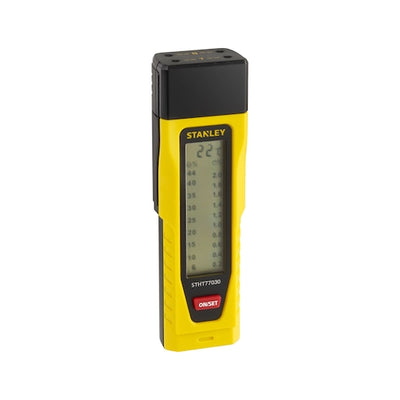
Moisture meters for wood and building materials are used to check beams, masonry and panels before laying floors or coverings. The soil moisture meter measures the water content in the ground, useful for gardening and sowing. Choose according to the material to be checked, and compare readings at several points, because a single reading can be misleading.
How do I use type K temperature probes?
Type K probes measure temperature with a thermocouple, and are inserted into the medium to be checked or placed against the surface. For ambient temperature you need a different probe from the immersion type, as indicated in the two Fervi versions. Let the reading stabilise for a moment, and check that the probe is clean and correctly connected to the instrument.
What is a vacuum gauge with shut-off valve used for?
A vacuum gauge measures vacuum pressure in a closed circuit. With the shut-off valve you can isolate the reading from the rest of the system. The 5/16 inch connection must match the fitting on the appliance. It is used by maintenance technicians, who must follow the procedures specified by the manufacturer of the system.