
 In your quote
In compare
Temporary Signage Systems
110 products · Signage and Safety Management
Temporary signage is used to mark off, warn of and make visible work areas, obstacles and temporary routes on site, on the road and in industrial environments. This collection brings together the accessories most commonly used to mark a restricted or hazardous area, by day and by night.
Types of product in the collection
- Cones and delineators: traffic cones in rubber or polyethylene in various heights, and two-colour bollards.
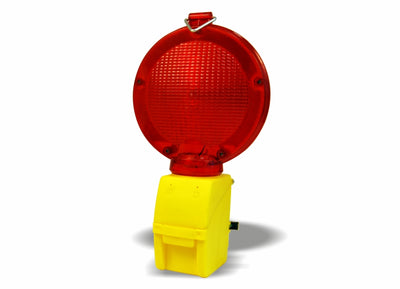
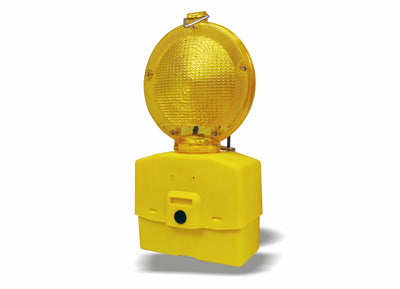
- Lanterns and flashing lamps: yellow and red lights for marking sites and obstacles.
- Warning tapes: white and red or fabric tapes for marking off areas.
- Portable signs: such as the wet floor sign.
How to choose
It depends on the environment: outdoors and on the road you need tall cones with reflective bands and clearly visible lights, while indoors or for light cordoning, tapes and bollards are enough. Check the height, the night-time visibility and the weight of the base if there is wind or traffic.
For quantities, availability and delivery times, AMES Srl works by quotation: write to info@amessrl.com or call 051 728529.
Active filters:
Products in this collection
In your quote
In compare
 In your quote
In compare
 In your quote
In compare
 In your quote
In compare
 In your quote
In compare
 In your quote
In compare
 In your quote
In compare
 In your quote
In compare
 In your quote
In compare
 In your quote
In compare
 In your quote
In compare
 In your quote
In compare
 In your quote
In compare
 In your quote
In compare
 In your quote
In compare
 In your quote
In compare
 In your quote
In compare
 In your quote
In compare
 In your quote
In compare
 In your quote
In compare
 In your quote
In compare
 In your quote
In compare
 In your quote
In compare
 In your quote
In compare
Frequently asked questions: Temporary Signage Systems
Which cones and bollards should I use to mark off a roadworks area?
Two-colour cones and bollards mark off the work area and show its boundaries clearly during the day. On public roads, site signage must comply with the Italian Highway Code and its implementing regulation, which govern shapes, colours and positioning. Choose the height and weight according to the traffic and the speed of the road, and consult the authority that manages the road when necessary.
What is a signalling trailer and when is it needed?
A signalling trailer is a trailer fitted with signs, towed on the road to warn of works or obstacles from a distance. In the list you will find a 750 kg model from the Sisas brand, with a class indication. It is used where the signal must remain visible to those approaching at speed, for example on busy roads or during road maintenance work. Before use, check the rules for towing and the mass of the vehicle.
Which lamps and flashing beacons should I use to signal a site at night?
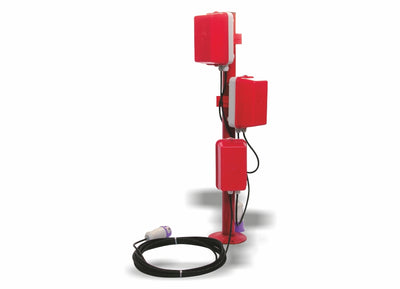
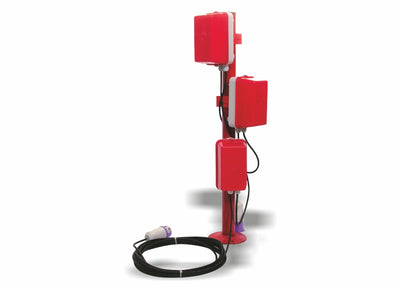
Yellow or red lamps and flashing beacons mark obstacles and work areas when light is poor. In the catalogue you will find yellow and red Friggeri lamps and illuminated signs with Sisas flashing beacons. The colour must be chosen according to the type of signal required by the code or the site plan. Check the power supply, battery or the dedicated set, and that the lights are visible from a distance.
How do I use scaffold lamps?
Scaffold lamps mark the edges of the scaffold and protruding obstacles, especially at night. In the catalogue you will find lamps such as the CO-PL05 and lamp modules such as the CO-MPL10, to be combined according to the manufacturer's datasheet. Choose the model according to the mounting height and the type of scaffold. Installation must be carried out with the scaffold at rest and with the power sources disconnected.
Which warning tape should I use to mark off areas and to signal buried pipes?
Red and white tape marks off a work area or a temporary walkway, including in industrial settings. Tapes for buried pipes and cables are laid above the line during excavation, to warn anyone digging in the future that a service is present. Choose the colour and the text according to the service to be marked and the type of excavation.
What are mobile protection signs and how are the classes read?
Mobile protection signs are moved along the site when the work area changes. In the catalogue you will find models marked as class 2 and other versions. Check in the datasheet what the stated class means and what use the sign is designed for, because performance varies from one model to another. Do not use a sign outside its intended use.
How do I use temporary signage safely on a building site?
Place cones and tape before starting work and remove them only once the work is finished. Check that the signage is visible from all sides and, at night, with lamps or flashing beacons switched on. Do not leave obstacles outside the protected area and check batteries and connections regularly. As Italian Legislative Decree 81/2008 on workplace safety requires for construction sites, the signage must be coordinated with the safety plan and with the instructions of the coordinator.