
 In your quote
In compare
Analogue Levelling and Marking-Out Tools
121 products · Analogue Measurement and Marking-Out
Analogue levelling and marking-out tools are used to check horizontals, verticals and alignments and to mark guide lines on the work surface. They are everyday tools for bricklayers, carpenters, installers and tilers, simple to use and always ready.
What you will find in this collection
- spirit levels of various lengths, also magnetic and telescopic, and digital levels
- inclinometers and squares, including granite surface squares
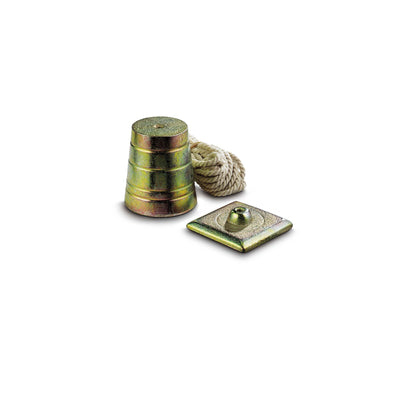
- chalk lines, bricklayer's lines and plumb lines
- levelling staffs, folding rules and scribers
- bags and cases to protect the levels
The brands available include Stabila, Fervi, Pavan, Mass, Probst, Rubi and Metrica.
How to choose
Choose the length of the level according to the surface to be checked: the longer it is, the more reliable on large surfaces, while short models fit into tight spaces. Then the sensitivity of the vial matters and, for work on metal sections, the presence of magnets. For marking long distances you need a chalk line or bricklayer's line, for verticals a plumb line.
Tell us what job you have to do and we will prepare a quotation with the most suitable instruments.
Active filters:
Products in this collection
In your quote
In compare
 In your quote
In compare
 In your quote
In compare
 In your quote
In compare
 In your quote
In compare
 In your quote
In compare
 In your quote
In compare
 In your quote
In compare
 In your quote
In compare
 In your quote
In compare
 In your quote
In compare
 In your quote
In compare
 In your quote
In compare
 In your quote
In compare
 In your quote
In compare
 In your quote
In compare
 In your quote
In compare
 In your quote
In compare
 In your quote
In compare
 In your quote
In compare
 In your quote
In compare
 In your quote
In compare
 In your quote
In compare
 In your quote
In compare
Frequently asked questions: Analogue Levelling and Marking-Out Tools
What is a spirit level for, and how is it used?
A spirit level checks whether a surface is horizontal or vertical: the bubble centres when the line is level. Place it on the surface to be checked and repeat the reading after rotating it 180 degrees, so that any error in the tool cancels out. It is used by bricklayers, carpenters, installers and tilers.
Which level length should I choose for walls and floors?
Short levels are enough for checking small sections, such as a stud or a profile. To check long walls or floors you need a longer level, which covers the slope better over the whole surface. Aluminium levels are robust for site use, while acrylic ones are lighter. The catalogue has 2-bubble and 3-bubble levels in several lengths.
What is the difference between a magnetic level and a standard level?
A magnetic level has one or more magnetic bases that fix it to a metal surface, such as a profile or a pipe, leaving your hands free. A standard level is held by hand or set down. Magnetic levels are useful in metalwork, in plant installations and in any job where a fixed reference on metal is needed.
What are a plumb line and a mason's line used for?
The plumb line, with the plummet at the end, shows the true vertical and is used to check pillars, edges and walls. The mason's line, stretched between two points, marks a horizontal reference along which bricks or plaster are aligned. Both are basic tools of the bricklayer. The 1 mm white polypropylene line is easy to see on the surface.
When is a digital level or an inclinometer needed instead of a spirit level?
A digital level shows the inclination on a display and lets you set precise slopes without reading a bubble. An inclinometer measures angles of inclination, useful for roof pitches, ramps or pipes. They are suited to situations where a precise numerical value is needed. For a quick check of a surface, a spirit level remains the most practical choice.
What are squares, chalk lines and scribers used for?
A square is used to check and mark right angles, and granite reference squares provide a stable reference for checking. A chalk line leaves a line of chalk or coloured powder on a wall or floor, to follow for cutting and laying. Scribers mark metal or wood at a precise point. They are basic tools for anyone cutting and laying.
How should spirit levels and precision tools be stored?
Keep levels protected from knocks and drops, as a blow can shift the bubble and distort the reading. Store them in a bag or case, away from damp and extreme temperatures. Clean the bearing surface of dust and mortar before use, and check the calibration from time to time by placing the level on a known flat surface.