
 In your quote
In compare
Trowels, Spatulas and Floats
418 products · Hand Tools for Construction
Trowels, spatulas and floats are the hand tools of the bricklayer, plasterer and tiler: they are used to spread mortar, adhesive and plaster, and to level and finish surfaces.
Types available
- Trowels: in various patterns, such as London, English and round-nosed, with wooden or synthetic handle, also in stainless steel.
- Pointing trowels and finishing trowels: for finishing and precision work.
- Floats and notched trowels: for spreading adhesive under tiles and coverings.
- Spatulas: notched spatulas for adhesives, stainless steel spatulas and general-purpose spatulas.
- Smoothing floats and finishers: magnesium floats and step nosing tools.
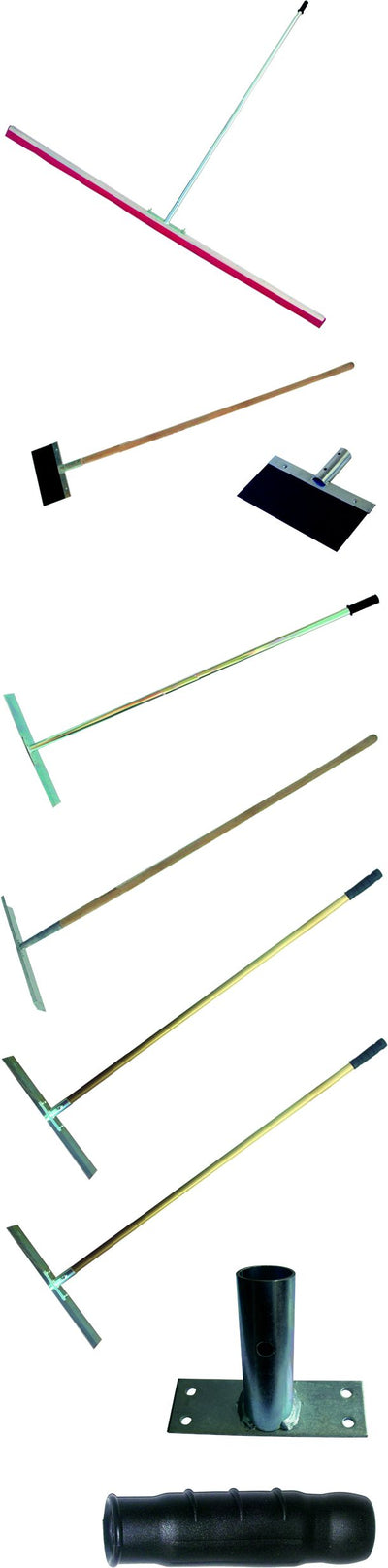
- Handles and spare parts: aluminium and plastic handles for plastering tools.
How to choose
The choice depends on the job: for brickwork you need sturdy trowels, for tiling, floats and spatulas with teeth suited to the tile format and the adhesive, for finishing, smooth thin blades. Consider the blade material (steel or stainless steel) and the handle, which matters if you work for many hours. The brands available include Pavan, Co.Me, Rubi, Mass, Barikell, Fervi and Unifix.
AMES works by quotation: tell us the tool you are looking for and the quantity and we will reply with availability and delivery times.
Active filters:
Products in this collection
In your quote
In compare
 In your quote
In compare
 In your quote
In compare
 In your quote
In compare
 In your quote
In compare
 In your quote
In compare
 In your quote
In compare
 In your quote
In compare
 In your quote
In compare
 In your quote
In compare
 In your quote
In compare
 In your quote
In compare
 In your quote
In compare
 In your quote
In compare
 In your quote
In compare
 In your quote
In compare
 In your quote
In compare
 In your quote
In compare
 In your quote
In compare
 In your quote
In compare
 In your quote
In compare
 In your quote
In compare
 In your quote
In compare
 In your quote
In compare
Frequently asked questions: Trowels, Spatulas and Floats
What are trowels, spatulas and floats used for in masonry work?
Trowels, spatulas and floats are used to pick up, spread and level mortar, adhesive and plaster. The trowel carries and distributes the mortar, the spatula spreads the mix over flat surfaces, and the float smooths it to an even finish. They are the basic tools of bricklayers, plasterers and tile layers.
What is the difference between a round-point trowel and a square-point trowel?
The round-point trowel has a rounded end and is used to pick up mortar and to lay bricks. The square-point trowel has a straight, sharp-edged tip, better suited to levelling and to working in corners. The catalogue includes both, for example round-point trowels item 941 and square-point trowels item 946.
Steel or stainless steel trowel: how do I choose?
Steel is strong and has a rigid blade, but it must be dried and oiled to prevent rust. Stainless steel resists moisture and contact with mortars and cements better, and is easier to clean. The handle matters too: wood is pleasant in the hand, while synthetic material is more resistant to water. Choose according to the type of work and the environment.
Which notched trowels are needed for laying tiles and wall coverings?
Notched trowels spread adhesive in layers of even thickness. The size of the notches determines how much adhesive stays under the tile: large formats and heavy tiles need coarser notches, while small formats need finer ones. Always use the size specified by the adhesive manufacturer, which is the most reliable guide.
What is a shaped float for corners used for?
The shaped float follows the shape of the corner and allows you to smooth mortar or plaster without leaving marks on the adjacent surface. The catalogue includes Pavan floats for internal corners with sharp or rounded edges, and for external corners with sharp edges. They are used by plasterers and tilers to finish the edges of walls, pillars and steps.
How do I work with trowels and floats for hours without tiring?
Hold the handle naturally, without forcing your wrist, and take regular breaks if the work is repetitive. Wear gloves to protect your hands from alkaline mortars and cements, which can irritate the skin. Clean the tool straight after use, before the mix hardens, because an encrusted tool performs poorly and tires you more.
Which surfaces are best suited to a steel or stainless steel spatula?
Stainless steel spatulas and universal spatulas are used for filling, skimming and smoothing flat surfaces. The rigid blade lets you spread the material evenly. Choose the blade width according to the area to be covered: wide blades for large surfaces, narrow blades for details and edges.