
 In your quote
In compare
Hammer Drills, Drill Drivers and Rotary Hammers
106 products · Drills, Drivers and Electric Hammers
This collection brings together the power tools for drilling and driving in everyday building and workshop use: hammer drills, drill drivers, impact drivers and rotary hammers. They are the basic equipment for fixing, assembling and drilling in wood, metal and masonry.
Types available in the collection
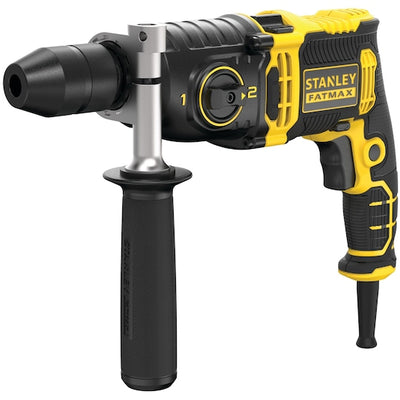
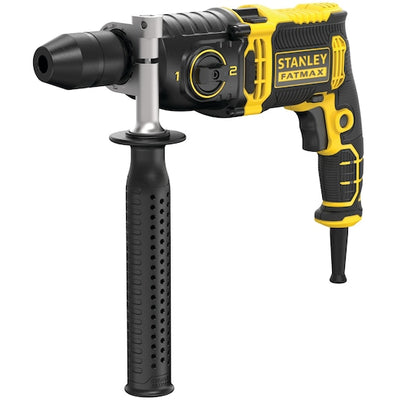
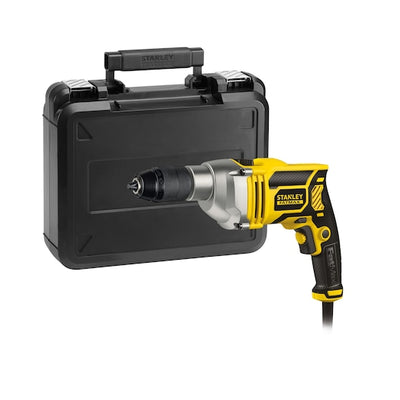
- Corded hammer drills, for drilling masonry and hard materials
- Cordless drill drivers, also with hammer action, from Makita, DeWalt, Milwaukee and Stanley
- Compact drivers for screws
- Rotary hammers, corded or cordless, for deep holes in concrete and stone, including SPIT and Makita models
How to choose the tool
Choose according to the material and the diameter of the hole: a drill is enough for wood and metal, hammer action is needed for masonry, and a rotary hammer for concrete and larger holes. Between corded and cordless, the former has no limit on run time, the latter gives more freedom of movement.
For quantities, availability and delivery times, request a quote from AMES Srl: we will recommend the model suited to your work.
Active filters:
Products in this collection
In your quote
In compare
 In your quote
In compare
 In your quote
In compare
 In your quote
In compare
 In your quote
In compare
 In your quote
In compare
 In your quote
In compare
 In your quote
In compare
 In your quote
In compare
 In your quote
In compare
 In your quote
In compare
 In your quote
In compare
 In your quote
In compare
 In your quote
In compare
 In your quote
In compare
 In your quote
In compare
 In your quote
In compare
 In your quote
In compare
 In your quote
In compare
 In your quote
In compare
 In your quote
In compare
 In your quote
In compare
 In your quote
In compare
 In your quote
In compare
Frequently asked questions: Hammer Drills, Drill Drivers and Rotary Hammers
What is the difference between a hammer drill and a drill driver?
A hammer drill has a mechanism that delivers blows to the bit, useful for drilling masonry and hard materials. A drill driver does not hammer and is used for drilling wood and metal and for driving screws. Many battery models have a hammer function, but for frequent holes in concrete a rotary hammer is the better choice.
When do I need a rotary hammer instead of a hammer drill?
A rotary hammer has a more powerful mechanism and often SDS-Plus fittings, and is designed for deep holes in concrete and stone. A hammer drill is suitable for smaller diameter holes and light masonry. The range includes corded or battery rotary hammers, including from SPIT and Makita.
Which power rating is best for my work?
The power of corded drills is rated in watts, for example 600, 750 or 1100 W, while battery models are rated by battery voltage. More watts mean more force, but not always more convenience. For frequent masonry work a more powerful machine is best; for occasional assembly a medium power is enough.
Battery or corded: which should I choose?
The battery model is free from the mains and can be taken on site without a cable, but requires charged batteries made for the same line. The corded model has constant power and needs no charging, so it suits long jobs in one fixed place. Choose according to where you work and which batteries you already own.
How do I use a hammer drill safely?
Wear glasses and a dust mask against masonry dust, and check that there are no cables or pipes in the drilling area. Hold the drill with both hands, especially the more powerful models, and wait for the bit to stop before putting it down. Unplug the drill or remove the battery before changing the bit.
Which drill and driver brands and models are in the range?
The range includes hammer drills from AEG, Ryobi, Powerplus, Ingco, DeWalt, HiKOKI and Stanley, as well as battery drivers from Makita, DeWalt, Milwaukee and Stanley. Milwaukee also offers the M18 FUEL right-angle drill and the compact M12 FUEL driver. Compare the model data sheet for power and chuck type.
Who uses these tools and for which jobs?
They are used by electricians, plumbers, bricklayers, furniture fitters and maintenance technicians to fix shelves, brackets, window frames and boxes. The rotary hammer is used on site for holes in concrete and stone, while the driver is used for assembling structures and furniture. In the workshop the drill is used to drill metal and wood.