
 In your quote
In compare
Equipment for Forklift Operators
299 products
This collection is for those who handle goods with trucks and lifting equipment in warehouses, yards or on site. It includes containers, lifting accessories and equipment for moving loads, to manage the flow of goods in an orderly way.
What you will find in this collection
- Stackable sheet metal containers and tipping containers
- Self-dumping skips
- Electric, manual and special pallet trucks
- Lifting forks for cranes
- Lifting slings
- Loading and access ramps
- Containers for waste or hazardous materials
How to choose
- Choose accessories and containers according to the weight and dimensions of the load to be handled.
- For pallet trucks, consider the type of floor and the frequency of movements, to decide between a manual and an electric version.
- For waste or hazardous materials, use only containers designed for that type of content.
- Check that slings and forks are suited to the attachment of the truck or crane with which you will use them.
For a quote or advice on making the right choice, write to or call AMES technicians: they will help you find the items suited to your work.
Active filters:
Products in this collection
In your quote
In compare
 In your quote
In compare
 In your quote
In compare
 In your quote
In compare
 In your quote
In compare
 In your quote
In compare
 In your quote
In compare
 In your quote
In compare
 In your quote
In compare
 In your quote
In compare
 In your quote
In compare
 In your quote
In compare
 In your quote
In compare
 In your quote
In compare
 In your quote
In compare
 In your quote
In compare
 In your quote
In compare
 In your quote
In compare
 In your quote
In compare
 In your quote
In compare
 In your quote
In compare
 In your quote
In compare
 In your quote
In compare
 In your quote
In compare
Frequently asked questions: Equipment for Forklift Operators
What accessories does a forklift operator need to move goods in a warehouse?
The forklift operator uses metal, mesh or polyethylene containers, tipping skips and stackers to move loads. For unloading bulk material there are self-dumping hoppers, while forklift sweepers clean the work area. An electric or manual pallet truck moves pallets, and ramps make loading easier. Choose each accessory according to weight, volume and the type of goods.
What load capacity should a forklift container have?
The capacity should always be checked on the container itself. For example, the 1200 x 800 x 800 mm polyethylene container in the catalogue is rated for 500 kg. Do not exceed the stated limit and do not confuse the maximum load with the empty weight. Also consider the shape of the goods, because an unstable load can slip during lifting.
Which pallet truck or stacker should I choose for warehouse loading?
A manual pallet truck suits short runs and light loads, while an electric one reduces effort on long, frequent runs. Stackers lift the pallet to height, like the manual stacker with a 1000 kg capacity in the catalogue. Consider the maximum weight, the width of the forks and the manoeuvring space before choosing.
Which rotating beacon should I use for forklifts and warehouse vehicles?
The rotating beacon warns pedestrians of the vehicle's presence in manoeuvring areas, especially where visibility is limited. The catalogue has magnetic, flexible-base and 12 V versions. Choose the version according to the type of vehicle and how it is to be fixed. The beacon is an additional signal and does not replace traffic rules or operator training.
Which loading gates for mezzanines and pallets are needed in a warehouse?
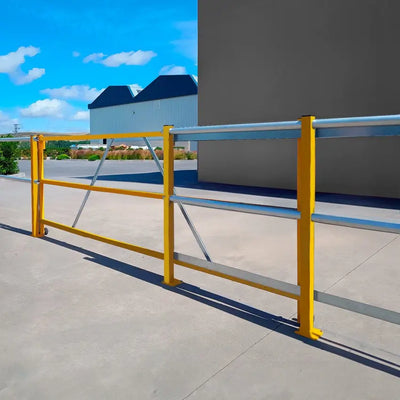
Loading gates for mezzanines close off access at height when no work is being done, while telescopic sliding gates make pallet loading easier. They should be chosen according to the width of the opening and how often they are used. The double-leaf gate with a safety zone is better where a clean closure is needed. Check that the mechanism is intact, because a faulty gate can cause falls.
Which bottom-opening containers should I choose for unloading goods?
Bottom-opening containers allow unloading from below without tipping the container. Metal ones are sturdier, while wire-mesh ones are lighter and let you see the contents. The catalogue also has stackable versions with automatic closing. Choose according to the weight of the load, the frequency of unloading and the area where it is to be placed.
Who uses forklift operator equipment, and in which warehouses?
It is used by forklift operators, warehouse staff, logistics and handling workers in warehouses, yards and building sites. It is needed to load, unload and store goods, with containers, hoppers and pallet trucks. Anyone driving the truck must have the mandatory training required by the Italian State-Regions agreements and must respect the capacity stated on each accessory.