
 In your quote
In compare
Supplies for Road and Motorway Construction
2772 products
This collection brings together supplies for the road and motorway construction sector: site signage, hi-vis clothing, surveying instruments and lifting equipment. The catalogue includes items from Portwest, Neri, Spektra, Sisas, Leica, Breaker and Probst.
What you will find
- Site signalling: two-colour bollards, LED flashing lamps and accessories for delimiting and signalling the work area.
- Clothing and PPE: jackets, trousers, T-shirts and hi-vis garments, including thermal and waterproof ones.
- Surveying and machine control: instruments, receivers and software for measuring and guiding vehicles on site.
- Lifting: grabs and devices for handling heavy elements.
How to choose
When working near traffic, visibility is what counts: garments must be suited to the activity carried out and to the light and weather conditions. For signage, the visibility and stability of the devices matter; for surveying instruments, the accuracy required by the job.
For availability, delivery times and terms, write to us at info@amessrl.com or call 051 728529: we will prepare a tailored quotation for you.
Active filters:
Products in this collection
In your quote
In compare
 In your quote
In compare
 In your quote
In compare
 In your quote
In compare
 In your quote
In compare
 In your quote
In compare
 In your quote
In compare
 In your quote
In compare
 In your quote
In compare
 In your quote
In compare
 In your quote
In compare
 In your quote
In compare
 In your quote
In compare
 In your quote
In compare
 In your quote
In compare
 In your quote
In compare
 In your quote
In compare
 In your quote
In compare
 In your quote
In compare
 In your quote
In compare
 In your quote
In compare
 In your quote
In compare
 In your quote
In compare
DeWalt
Cordless cut-off saw XR FlexVolt 54V with 2 x 9.0Ah batteries DeWalt DCS690X2-QW
Code DCS690X2-QW
 In your quote
In compare
Frequently asked questions: Supplies for Road and Motorway Construction
Which bollard or barrier should I choose to mark off a road works site?
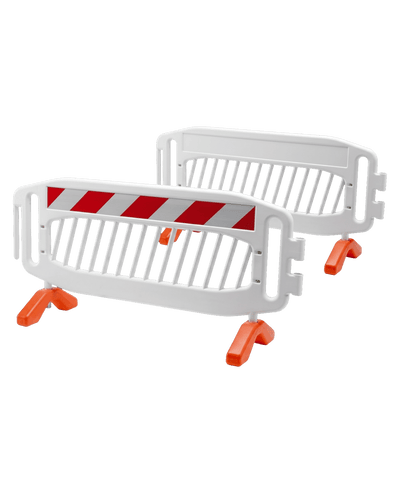
Two-colour bollards mark the edges of the site and guide road users. Polyethylene barriers with adjustable feet adapt to uneven surfaces and are easy to move. The mobile traffic separator and the road barrier are used to divert traffic or protect the work zone. Choose according to the duration of the works, the weight needed for stability and visibility at night.
Which LED flashing lamps should I use to mark a work area at night?
LED flashing lamps increase visibility at night and on stretches where traffic moves fast. Check the stated brightness and battery life, and choose models with a stable base. Mount them on bollards or delineators so that they are visible from a distance. Check regularly that they are charged and working before every shift.
Which high-visibility clothing is needed for people working on the road?
People working on the road must wear high-visibility garments compliant with the EN ISO 20471 standard, with reflective bands and fluorescent colours. The class depends on the traffic and the type of work, and class 3 offers the greatest visibility. Thermal or waterproof jackets and trousers maintain visibility even in cold or rain. Choose a size that allows free movement and check the bands for wear.
How do I use a universal manhole cover lifter safely?
A manhole cover lifter is used to raise manhole and inspection chamber covers without straining the back. Before use, check that the cover is in good condition and that the area is cordoned off. Position the tool securely, wear gloves and safety footwear, and never lift the cover with your hands on the edge. Put the cover back in place straight after the job to prevent falls.
Which de-icing salt should I choose for roads, walkways and yards?
De-icing salt melts ice on roads, walkways and forecourts. The 5 kg pack suits limited surfaces, while for larger areas bagged salt is spread. Dose sparingly, because too much can damage concrete, vegetation and nearby surfaces. Choose a pack size suited to the space to be treated and keep it dry.
Which line, pole or diamond blade should I choose for a road works site?
For surveying along the route you need a pole, a line and stakes to fix the alignments. The 1 mm polypropylene builder's line is useful for marking out references and alignments. The diamond blade is used to cut asphalt and concrete, and should be chosen according to the material. Always wear safety glasses and respiratory protection when cutting.
Which traffic separator or road barrier should I choose for traffic safety on a worksite?
The mobile traffic separator is a lightweight element that separates lanes or closes a lane temporarily. N2 class road barriers are designed to contain vehicles at the roadside and must comply with the EN 1317 standard. The choice depends on the type of road, the speed of the traffic and the duration of the works. Installation must be carried out by trained personnel, following the safety plan.