
 In your quote
In compare
Equipment for Surveyors
1192 products
Surveyors survey, measure, mark out and check levels and alignments, on site as well as at the design stage. The collection brings together measuring and marking-out instruments, from simple tape measures to lasers, from brands such as Leica, Stabila, Stanley, DeWalt and Fervi.
What you will find in this collection
- Laser measures and accessories
- Analogue distance measuring tools, measuring wheels and tape measures
- Line lasers and rotary lasers, with their accessories
- Analogue levelling and marking-out tools
- Standard spirit levels and builders' levels
- Folding rules and tailor's tape measures
- Instruments for electrical and gas measurement
How to choose
- Line or rotary laser: line lasers are suited to interior work, rotary lasers to larger surfaces and outdoors.
- Outdoors: the laser beam is hard to see in bright light, so consider a compatible detector.
- Distances: for long, repeated measurements use laser distance meters or measuring wheels; for detailed dimensions, tape measures and folding rules.
- Accessories: check that brackets and tripods are compatible with the chosen instrument.
To choose the right models, quantities and compatibility for your work, request a quote: AMES technicians will help you find the right solution.
Active filters:
Products in this collection
In your quote
In compare
 In your quote
In compare
 In your quote
In compare
 In your quote
In compare
 In your quote
In compare
 In your quote
In compare
 In your quote
In compare
 In your quote
In compare
 In your quote
In compare
 In your quote
In compare
 In your quote
In compare
 In your quote
In compare
 In your quote
In compare
 In your quote
In compare
 In your quote
In compare
 In your quote
In compare
 In your quote
In compare
 In your quote
In compare
 In your quote
In compare
 In your quote
In compare
 In your quote
In compare
 In your quote
In compare
 In your quote
In compare
 In your quote
In compare
Frequently asked questions: Equipment for Surveyors
What is a laser distance meter used for in surveying?
A laser distance meter measures distances quickly, without having to stretch out a tape measure, and the more complete models also calculate areas and volumes. It is useful for surveying rooms, checking levels and checking walls and floors. The stated accuracy varies between models, so read the data sheet before choosing.
Which laser level should I choose, line or rotary?
Line lasers project straight beams and suit tiles, partition walls and interior alignments. Rotary lasers cover the whole site and are used to level floors and large areas, with accessories such as a receiver and a tripod. Choose according to the area to be covered and the type of work you do most often.
What is the laser class and why does it matter?
The laser class indicates how much energy the instrument emits and what precautions are needed to protect the eyes. This information is given on the product sheet and should be read before use. Never point the beam at people and never look directly at the beam, even from a distance.
What is a crack gauge used for?
A crack gauge measures how wide a crack is over time, fitted across a wall, a corner or a flat surface, to see whether the crack is stable or moving. It is fixed over the crack and the change is read, usually over several successive checks. For structural cracks, the reading must always be interpreted by a qualified professional.
Which ranging pole should I choose for surveys?
The 160 cm octagonal ranging pole with forged tip is a graduated rod used as a vertical reference for measuring heights and levels. Choose the height according to the distance to be read and the visibility from the station point. The tip helps it grip the ground, but the pole must always be held vertical while reading.
Why are power stations rated in Wh useful on site?
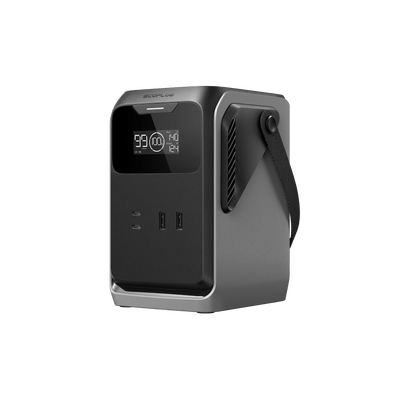
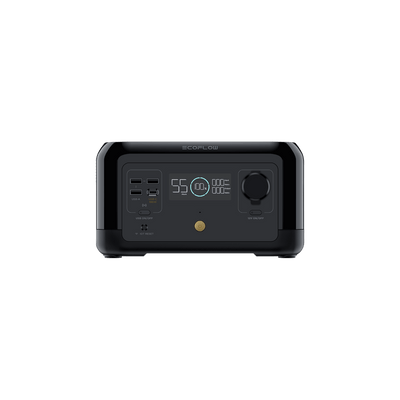
The capacity in Wh shows how much energy the battery can deliver and helps you work out how long a device will stay on. Compare the power in watts of your tools with the capacity of the power station, bearing in mind that the real output is often lower than the rated value. Models such as the RIVER mini 210 Wh and the DELTA mini at 1,400 W represent different sizes.
Which specifications should I look at on power banks and portable solar panels?
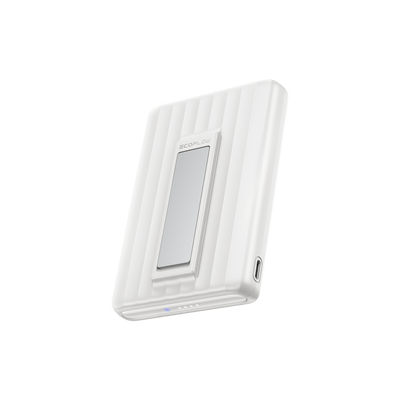
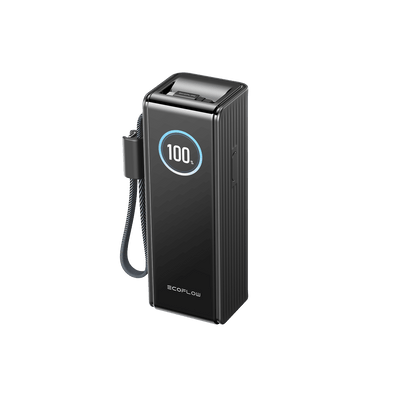
For power banks, what counts is the capacity in mAh, the power in watts and the number and type of ports, such as USB-C or wireless charging. For portable solar panels, look at the stated watts and whether there is a USB-C output. Check that the charger and the cable are compatible with the device to be charged.
Where are these instruments used?
The surveyor uses them for surveys, setting out and level checks, both on site and at the design stage. Laser distance meters and levels are used to check the alignment of walls, floors and services. Power stations and portable chargers are useful when there is no electrical socket on site.