
 In your quote
In compare
Equipment for Industrial Cleaners
5319 products
This collection is for anyone who cleans warehouses, workshops, building sites and commercial premises. It brings together machines, accessories, hand tools and chemical products from brands such as Kärcher, Makita, IPC Worldwide, Annovi Reverberi, Chemical Roadmaster, Faren and Firma Chimica.
What the collection includes
- Pressure washers, medium and high pressure, with their accessories
- Professional and commercial vacuum cleaners for solids and liquids
- Industrial cleaning machines
- Manual cleaning equipment
- Detergents, general-purpose professional cleaners and special chemicals
- Containers for waste or hazardous materials
- Masks for dust and gases
- Insecticides and traps for animals and insects
How to choose
- Choose a pressure washer or a vacuum cleaner according to the surface to be cleaned and the type of dirt, solid or liquid.
- Check that the accessories are compatible with the machine model.
- Read the detergent's directions for use and wear suitable protection when handling chemical products.
- For work involving dust or fumes, provide a suitable mask.
For a tailored proposal, request a quote from AMES technicians.
Active filters:
Products in this collection
In your quote
In compare
 In your quote
In compare
 In your quote
In compare
 In your quote
In compare
 In your quote
In compare
 In your quote
In compare
 In your quote
In compare
 In your quote
In compare
 In your quote
In compare
 In your quote
In compare
 In your quote
In compare
Carvel
Contenitore per medicinali scaduti in acciaio zincato bianco con serratura Carvel
Code CNT02MED
 In your quote
In compare
 In your quote
In compare
 In your quote
In compare
 In your quote
In compare
 In your quote
In compare
 In your quote
In compare
Carvel
Contenitore portarifiuti in acciaio zincato 50 L con sportello basculante Carvel
Code CNT03RD
 In your quote
In compare
 In your quote
In compare
 In your quote
In compare
 In your quote
In compare
 In your quote
In compare
 In your quote
In compare
 In your quote
In compare
Frequently asked questions: Equipment for Industrial Cleaners
Which pressure washer should I choose for cleaning an industrial unit or a building site?
The choice depends on the surfaces: high pressure is for encrusted dirt and industrial floors, medium pressure for more general jobs on vehicles and less heavily soiled surfaces. Check the pressure in bar and the flow rate in litres per hour declared by the manufacturer and compare them with the type of dirt. With the standard or long spray gun you can reach different areas without moving the machine, choosing the accessory according to the area.
Which vacuum cleaner should I use for solids and liquids in a workshop?
A dry vacuum for solids collects dust, shavings and debris, while a wet vacuum for liquids collects spilled water and oil: using the wrong model can damage the motor. For fine dust, check that the filter is suitable, because fine dust can clog it quickly. Check the tank capacity against the job and empty the container before it fills up.
Which wheeled sprayer should I choose for detergents?
The 24-litre wheeled sprayer is chosen according to the amount of product to be applied during the day and the distance of the points to be treated. The level indicator saves you from refilling unnecessarily and the spiral hose lets you move around without dragging the container. The adjustable spray gun lets you switch from jet to spray according to the surface, and it is important to use only products compatible with the tank.
How do I pick up dirt from an industrial floor with a dustpan and broom?
The dustpan with a painted steel handle is used to pick up dirt after sweeping without bending over too much. The telescopic broom handle, adjustable from 84 to 150 cm, lets you work standing up on large floors. Brooms should be chosen with bristles suited to the type of floor, and the brush holder keeps the tool tidy between one shift and the next.
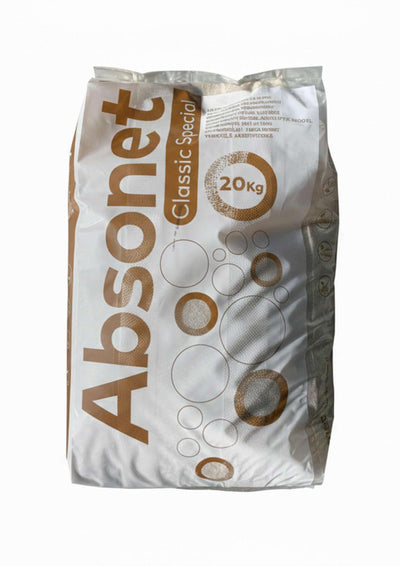
Which absorbent sawdust should I use for liquid spills in a workshop?
Absorbent sawdust soaks up liquids spilled on the floor and reduces the risk of slipping. After use it must be collected with the dustpan and put in a closed container, to be disposed of as waste according to local rules. Do not pour it down the drain and do not mix it with other waste without checking that they are compatible.
Which professional detergents should I choose for workshop surfaces?
The detergent should be chosen according to the surface to be cleaned, such as metal, concrete or glass, and the type of dirt, which may be grease, dust or machining residue. Before use, read the safety data sheet and follow the dosages indicated by the manufacturer. Do not mix different products, because some combinations can give off dangerous fumes, and always keep containers closed and labelled.
Which bags should I use for organic waste on site and in the workshop?
Biodegradable and compostable bags on a roll are for collecting wet organic waste, such as kitchen scraps and grass cuttings, and they differ from bags for general waste. Keep separate containers for each type of waste and keep the bags closed until collection. Before starting, check the collection rules of your local council, which can differ even for the same type of bag.