
 In your quote
In compare
Floor Planers and Scarifiers
30 products · Flooring Work
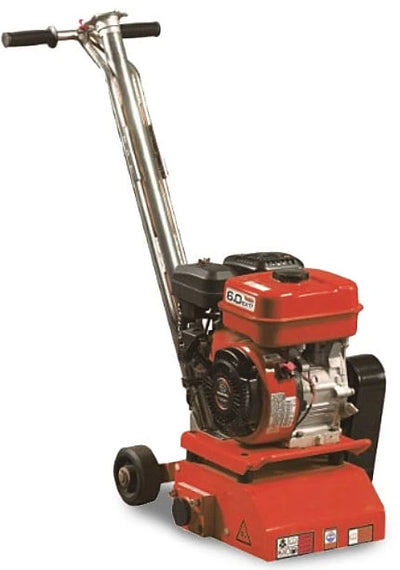
Scarifiers and floor planers remove surface layers of concrete, screed, resins, adhesives and paints, and prepare the substrate for new laying or a coating. They are used on industrial floors, in sheds and for refurbishment work. The collection includes machines and accessories from the Breaker and Sea Technology brands, as well as A.M.E.S. products.
What you will find in the collection
- Petrol-engine or electric scarifiers: to remove and roughen the surface layer.
- Surface preparation machines: models such as the Seaprecut and Seascar from Sea Technology.
- Floor planers: also with an extendable frame for working standing up.
- Disc sanders: portable machines for finishing and small surfaces.
How to choose
It depends on the surface and the depth of removal: for large areas you need wheeled machines, for small areas or work close to walls compact models. Consider the available power supply, single-phase or petrol engine, and the tool fitted, chosen according to the material to be removed.
For quantities, models and availability, request a quote from AMES Srl: we will reply with a tailored proposal.
Active filters:
Products in this collection
In your quote
In compare
 In your quote
In compare
 In your quote
In compare
 In your quote
In compare
 In your quote
In compare
 In your quote
In compare
 In your quote
In compare
 In your quote
In compare
 In your quote
In compare
 In your quote
In compare
 In your quote
In compare
 In your quote
In compare
 In your quote
In compare
 In your quote
In compare
 In your quote
In compare
 In your quote
In compare
 In your quote
In compare
 In your quote
In compare
 In your quote
In compare
 In your quote
In compare
 In your quote
In compare
 In your quote
In compare
 In your quote
In compare
 In your quote
In compare
Frequently asked questions: Floor Planers and Scarifiers
What are floor scarifiers and milling machines used for?
They remove surface layers of concrete, screed, resins, adhesives and paints, making the surface suitable for new laying or a covering. They are used on industrial floors, warehouses and restoration work. Scarifiers remove thicker layers with rotors and discs, while milling machines work with cutters for surfaces and edges.
Which scarifier should I choose between SP200A, SP250 and S150?
The choice depends on working width, power and the layer to be removed. Compare the technical data sheets of the models by working width and power, as they change the pace of work and the number of passes. The catalogue includes versions with Honda GX160 or GX270 engines, Lombardini or Kohler engines, or electric three-phase 380 V or single-phase 220 V machines.
Which engine should I choose for the scarifier, combustion or electric?
A combustion engine is self-sufficient and suited to sites without electrical connection, but it produces exhaust fumes and must be used in ventilated areas. The electric motor, three-phase or single-phase, is quieter and has no direct emissions, but needs an adequate power supply. Choose based on power availability and the work location.
Which rotor or disc should I use for light, medium or heavy scarification?
The rotor is chosen based on the depth and hardness of the material. The catalogue includes 125 mm rotors for light and medium scarification, and discs for heavy scarification. For thin layers the light rotor is enough, while to remove thick layers or hard materials it is better to move to the heavy disc. Check compatibility with the model.
How do I use a floor milling machine safely?
Before starting, check for services under the floor and mark the work area. Use the machine with a dust extraction system, if available, and wear a mask, safety glasses and hearing protection. Keep cables away from the cutting zone and do not force the machine: let the cutter work at its speed and stop if vibrations are abnormal.
Which standards apply to dust and noise from scarification?
Scarification produces silica dust and high noise levels, risks governed by D.Lgs. 81/2008, which requires them to be assessed and reduced. The employer must provide PPE and organise work to limit exposure times. Vibrations transmitted to the operator are also covered by the same decree.
When is it worth using a machine for pre-cutting parquet?
Pre-cutting makes a clean cut along the edge before removing the flooring, so that adjacent parts are not damaged. The catalogue includes the Seaprecut 180, designed for pre-cutting parquet. It is useful when you need to separate an area from the one to keep, or prepare a clean edge for new laying. Assess the cutting depth and the presence of services under the floor.