
 In your quote
In compare
General-Purpose Safety Gloves
409 products · Hand Protection
General-purpose safety gloves are the everyday gloves for work on site, in the workshop and in the warehouse: they protect hands from abrasion, thorns, splinters and dirt without reducing sensitivity.
Types in the collection
- Mechanic's gloves with a fabric backing and a palm coated in nitrile or polyurethane, from brands such as Neri and Portwest.
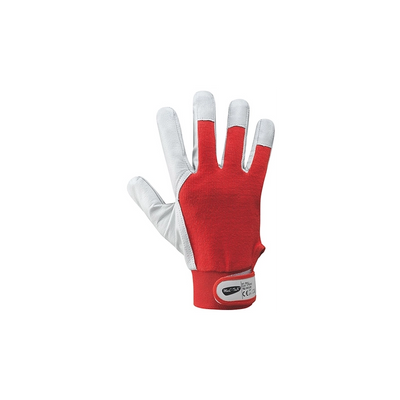
- Leather gloves: grain cowhide, leather and canvas, reinforced and driver's models, including Rubi.
- Micro-nitrile foam gloves for a good grip on oily or wet parts.
- Universal work gloves, including Base Protection and Efco.
How to choose
For working with tools and small parts you need sensitivity and grip, so a light backing and a coated palm. For handling loads, bricks and rough materials, leather is the better choice. Check the EN 388 marking on the packaging, which indicates the levels of mechanical resistance, and choose the right size.
We work on a quotation basis: write to us or call 051 728529 for quantities and pack sizes.
Active filters:
Products in this collection
In your quote
In compare
 In your quote
In compare
 In your quote
In compare
 In your quote
In compare
 In your quote
In compare
 In your quote
In compare
 In your quote
In compare
 In your quote
In compare
 In your quote
In compare
 In your quote
In compare
 In your quote
In compare
 In your quote
In compare
 In your quote
In compare
 In your quote
In compare
 In your quote
In compare
 In your quote
In compare
 In your quote
In compare
 In your quote
In compare
 In your quote
In compare
 In your quote
In compare
 In your quote
In compare
 In your quote
In compare
 In your quote
In compare
 In your quote
In compare
Frequently asked questions: General-Purpose Safety Gloves
What are general-purpose safety gloves used for?
General-purpose gloves protect hands against abrasion, minor cuts, thorns, splinters and dirt during work on site, in workshops and in warehouses. Without reducing sensitivity, they allow handling of small tools and materials. For work with chemicals or more serious cuts, a glove with specific protection is needed.
Which standard indicates the mechanical protection of work gloves?
Protection against mechanical risks, such as abrasion, cutting, tearing and puncture, is read from EN 388. The pictogram shows a series of numbers and a letter indicating the level achieved in each test. The glove should be chosen by looking at these values, not only the colour or material of the coating.
Nitrile, polyurethane, latex or leather: which material to choose?
Nitrile and polyurethane on the palm give good grip and oil resistance, and are suitable for mechanics and assembly. Latex is soft but can cause allergies, so it should be checked before use. Leather, such as bovine grain leather, resists abrasion and is used for heavy work or welding. Choose the material according to the main risk.
What is the difference between nitrile, foam-coated and dotted gloves?
Gloves with micro-nitrile foam or a dotted palm increase grip on oily or wet parts. Gloves with a nitrile palm offer oil and abrasion resistance. Dotted gloves leave the back more open than a fully coated glove. The choice depends on the type of grip needed for the work.
Is a cotton liner needed under a work glove?
The cotton liner absorbs sweat and makes the glove more comfortable during long working hours. It does not replace the protective glove and does not increase the mechanical resistance level. It is worn under the main glove, as an inner layer.
Which gloves should be used when working with liquids or chemicals?
For liquids and chemicals a glove to EN 374 is needed, which indicates resistance to chemicals and micro-organisms. The disposable blue nitrile glove is suitable for short, light work with liquids. Always check the manufacturer's compatibility chart for the substance you are handling.
How do you choose the size and fit of a work glove?
The size is measured across the palm, at the height of the knuckles, and the glove must neither be tight nor leave gaps at the fingers. A glove that is too large reduces grip and can get caught in machinery. A glove that is too tight tires the hand. Sizes are stated on the model data sheet.
How long does a work glove last, and when should it be replaced?
The glove must be replaced when the coating is worn, punctured or torn, or when grip is no longer secure. When working with oil or solvents the lifespan is shorter. Disposable nitrile gloves must be thrown away after each use and must not be reused.