
 In your quote
In compare
Jigsaw Blades for Wood
109 products · Saw Blades
Jigsaw blades are the thin blades fitted to a jigsaw to make straight or shaped cuts. This collection gathers blades dedicated to wood, for joinery, carpentry, and the fitting of kitchen worktops and furniture.
Types of blade available
- HCS steel blades: for cutting wood, in the DeWalt and Makita ranges.
- Bi-metal blades: more resistant to wear (Makita).
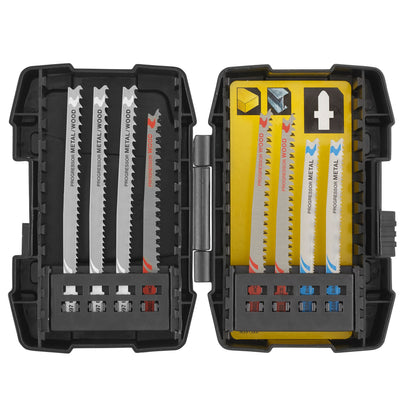
- Blade sets: assortments with T-shank for different cuts, including for kitchen worktops (Milwaukee).
How to choose the blade
First check the type of shank, which must be compatible with your jigsaw, and the usable length relative to the thickness to be cut. A coarse tooth pitch cuts faster but leaves a more chipped edge; a fine tooth pitch gives a cleaner cut. For curved cuts choose narrow blades, for straight cuts wider blades.
Every supply is on a quotation basis: tell us the model, quantity and intended use and the AMES team will prepare a tailored offer.
Active filters:
Products in this collection
In your quote
In compare
 In your quote
In compare
 In your quote
In compare
 In your quote
In compare
 In your quote
In compare
 In your quote
In compare
 In your quote
In compare
 In your quote
In compare
 In your quote
In compare
 In your quote
In compare
 In your quote
In compare
 In your quote
In compare
 In your quote
In compare
 In your quote
In compare
 In your quote
In compare
 In your quote
In compare
 In your quote
In compare
 In your quote
In compare
 In your quote
In compare
 In your quote
In compare
 In your quote
In compare
 In your quote
In compare
 In your quote
In compare
 In your quote
In compare
Frequently asked questions: Jigsaw Blades for Wood
Which jigsaw blade should I choose for wood?
For wood, use blades with wider, more widely spaced teeth, designed for fast, clean cuts. HCS steel blades, such as the DeWalt and Makita blades, cut softwood and plywood well. For curved cuts choose a thinner blade, while for straight cuts a wider one. Check the type of wood and the finish you want.
HCS or bimetal blade for wood: what is the difference?
HCS blades in carbon steel are the classic choice for wood. Bimetal blades, such as the Makita ones, have high-speed steel teeth on a more flexible body and resist wear better. They are recommended for wood with glued joints, metal residues or abrasive materials. For ordinary wood an HCS blade is enough.
What type of shank should the jigsaw blade have?
The shank is the part that fits into the jigsaw, and the systems differ between brands and models. Among the products in the catalogue there is the T-shank, as in the Milwaukee blades. Before buying, check the manual of your jigsaw to see which shank it uses, because a blade with a different shank does not fit securely and cannot work safely.
How do I read the length and thickness of a jigsaw blade?
In the names of Makita blades you will see sizes such as 80x0.8 mm or 130x1.25 mm: compare these with the technical sheet of your jigsaw before buying. The number of teeth per inch (TPI) changes the finish: finer teeth give smoother cuts, coarser teeth cut faster. For curves, thinner and more flexible blades are needed.
How do I use a jigsaw safely with wood blades?
Always clamp the workpiece, keep your hand away from the blade and do not press: let the tool work without forcing it. Change the blade with the machine switched off and unplugged, and check it is locked in the holder before switching on. Wear glasses and keep the work area clear of chips and cables.
What jobs are done with jigsaw blades for wood?
Cutting panels, battens, boards, frames, kitchen worktops and small furniture. Blades with finer teeth are used for straight, precise cuts, and those with coarser teeth for roughing out and cutting quickly. For kitchen worktops there are specific blades for precise cuts, such as the Milwaukee ones.
Who uses jigsaws with wood blades?
Woodworkers, cabinetmakers, kitchen and furniture fitters, carpenters and DIY enthusiasts use jigsaws for cuts that a circular saw cannot make well. They use it for curves, shapes and finishing in tight spaces where the bulk of a saw is a problem.