
 In your quote
In compare
Thermometers and Weather Stations
54 products · Camping, Office and Comfort
Instruments for measuring temperature and ambient conditions at home, in warehouses, greenhouses and on building sites. The collection includes A.M.E.S., Vigor, Fervi, Metrica and Stanley items.
From simple thermometers to professional instruments, the range covers both everyday monitoring of the environment and spot measurements during a job. They are practical instruments for anyone who needs to check the conditions of a workplace, a greenhouse or a warehouse, and for domestic use as well.
What you will find in this collection
- Digital thermometers, including min/max, and bath thermometers
- Infrared thermometers
- Thermo-anemometers
- Multifunction stations and weather stations
How to choose
- To measure at a distance or on hot surfaces, choose an infrared thermometer.
- To monitor the environment over time, choose a model that records the minimum and maximum.
- If you also need to measure air speed, use a thermo-anemometer.
For measuring instruments suited to your use, request a quote from the AMES technicians: we will help you choose the model.
Active filters:
Products in this collection
In your quote
In compare
 In your quote
In compare
 In your quote
In compare
 In your quote
In compare
 In your quote
In compare
 In your quote
In compare
 In your quote
In compare
 In your quote
In compare
 In your quote
In compare
 In your quote
In compare
 In your quote
In compare
 In your quote
In compare
 In your quote
In compare
 In your quote
In compare
 In your quote
In compare
 In your quote
In compare
 In your quote
In compare
 In your quote
In compare
 In your quote
In compare
 In your quote
In compare
 In your quote
In compare
 In your quote
In compare
 In your quote
In compare
 In your quote
In compare
Frequently asked questions: Thermometers and Weather Stations
Which thermometer do I need for the fridge or freezer?
The fridge thermometer should be placed in a stable spot inside the appliance, away from the walls and the door, to read the real internal temperature. In food environments, temperature control is part of the HACCP system and must be recorded regularly. If you want to read the temperature without opening the door, choose a model with an external probe.
Digital or analogue thermometer: which should I choose?
A digital thermometer shows the temperature with greater precision and often stores the minimum and maximum, which is useful for recording a range. The analogue one in metal or wood needs no batteries and is easy to read at a glance. The infrared thermometer measures the surface without contact, so it does not show the temperature of the air or of a liquid.
How do I use an infrared thermometer?
An infrared thermometer reads the temperature of a surface when you point the instrument at it from the distance stated in the manual. It does not measure shiny or reflective surfaces well and does not give the temperature inside an object. For precise measurements it is best to check the value with a contact thermometer.
Which thermometer should I use for a swimming pool or for water?
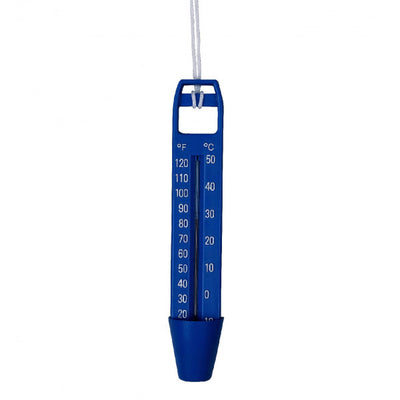
The pool thermometer floats or is attached to the edge and reads the water temperature at a limited depth. It is best placed in an area where the water circulates, avoiding direct sun that only heats the surface layer. For the water in a tub or a garden pond, smaller and simpler models are also suitable.
What is a weather station and what does it measure?
A weather station collects temperature, humidity and other environmental parameters and shows them on a display. It is used to monitor conditions in a greenhouse, a warehouse or a building site. Before buying it, check which quantities it measures and where the outdoor sensor can be placed, because the position affects the reading.
What is a thermo-hygrometer used for?
The thermo-hygrometer measures the temperature and relative humidity of the air. It is used in greenhouses, warehouses or cellars to tell whether the environment is too dry or too damp. Place it away from heat sources and direct light, at mid-height in the room, so that the reading represents the air you breathe.
What are thermometers with min/max memory used for?
The min/max thermometer records the lowest and the highest temperature reached over a period, without having to check it continuously. It is useful in a greenhouse for cold nights, in a warehouse, or to check temperature variations during transport. Reset the memory before starting a new measurement, otherwise the previous values remain.
Where should I put a window thermometer?
The window thermometer is applied to the outside of the glass, on the shaded side, to read the air temperature without the direct heat of the sun. It should be installed at a height that is easy to see and away from air conditioners or exhausts. The value is indicative and is mainly used to compare changes over time.