
 In your quote
In compare
Marking Gauges
12 products
The height gauge is the bench tool used to transfer a height onto a workpiece: resting on a reference surface, its point scribes lines parallel to the surface or checks its height. It is used in mechanical workshops, in metalwork and in joinery, when you need to mark accurately before cutting, drilling or machining a part.
Types of height gauge available
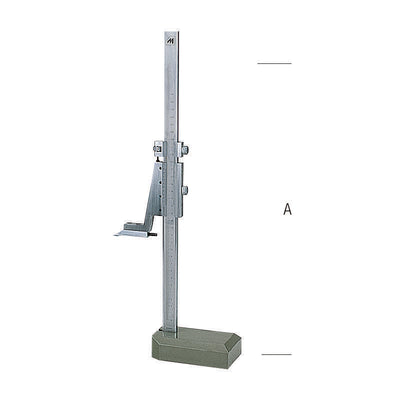
- Graduated-scale height gauges: steel beam with scale and slider, in standard or precision versions.
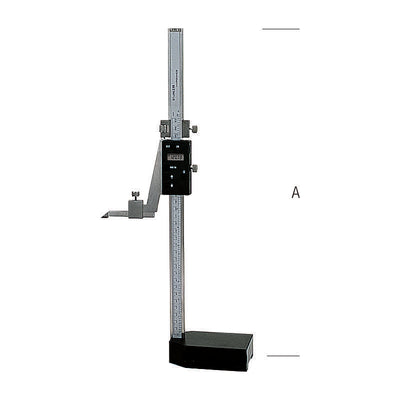
- Digital height gauges: electronic display to read the height without interpreting the scale, also in multifunction versions.
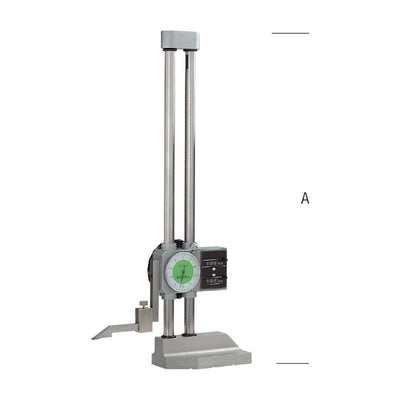
- Dual-scale height gauges, designed to have two reading scales on the same instrument.
- Marking gauges for wood, with graduated beam and a slider to lock for scribing lines parallel to the edge.
How to choose a height gauge
Start from the maximum height you need to measure: the collection includes different ranges, for example 300, 500 and 600 mm. Then choose the type of reading: the graduated scale is simple and robust, the digital display is quicker to read. Check that the base is perfectly flat and that the body is made of steel, and always use the instrument on a clean surface plate. Brands available include Fervi, Metrica and Stanley.
For the ranges, resolutions and availability of individual models, request a quote from the AMES team.
Active filters:
Products in this collection
In your quote
In compare
 In your quote
In compare
 In your quote
In compare
 In your quote
In compare
 In your quote
In compare
 In your quote
In compare
 In your quote
In compare
 In your quote
In compare
 In your quote
In compare
 In your quote
In compare
 In your quote
In compare
 In your quote
In compare
Frequently asked questions: Marking Gauges
What is a height gauge used for?
The height gauge is used to transfer a height onto a piece: resting on a reference surface, its point scribes a line parallel to the surface or measures the height of a point. It is used in mechanical workshops, in metalwork and in joinery, before cutting, drilling or machining a piece, when the marking has to be accurate.
Does a height gauge need accuracy checks?
For the height gauge, the figure to check is the accuracy declared by the manufacturer, given as resolution or tolerance on the datasheet. The instrument must be used on a stable, flat surface plate, because an uneven surface falsifies the reading. Check it at regular intervals if you use it for precision work.
What is the difference between a graduated-scale height gauge and a digital one?
The graduated-scale height gauge has a beam with a scale and a slider: the height is read by eye, without batteries, as in the Fervi matt chrome steel height gauge. The digital one shows the height on a display, so it does not require you to interpret the scale. The Fervi T092/600 multifunction digital height gauge is an example of a model with a display.
Which factors matter when choosing a height gauge?
The type of reading, analogue or digital, the length of the beam, that is the measuring range, and the presence of functions such as the dial indicator or dual graduation all matter. In the same Fervi series, for example, there are T100/500 and T100/300 versions: compare the measuring range with the height of the pieces you have to work.
When do I need a height gauge with a dial indicator?
The height gauge with dial indicator, such as the Metrica height gauge with dial indicator, is needed when the height has to be read with greater precision, for example to check the deviation between two points or the flatness of a piece. The dial indicator shows the difference on a pointer and must be used resting on a stable reference surface.
How do I use a height gauge safely on the bench?
Rest the piece on a stable bench and clamp it so that it does not move while you mark. The point of the height gauge is sharp: lower it with care and put it away when you are not using it. Do not leave the instrument on the edge of the bench and clean the surface plate of swarf before measuring.
What is the difference between a height gauge and a scriber?
The scriber is used to mark lines on metal or wood, and the collection has one with a Pinie scale. The height gauge, on the other hand, transfers a measured height from a reference surface and has a beam with a scale or a display. If you only need to mark a line, the scriber is enough; to transfer an accurate height you need the height gauge.