
 In your quote
In compare
Shears and Snips
56 products
Snips are hand-operated lever tools for cutting thin sheet metal and other sheet materials. On site they are used for sheet-metal work, flashings and metal cladding, and in the workshop for trimming and maintenance jobs.
Types in the collection
- Tinman's snips with straight, right-hand or left-hand cut
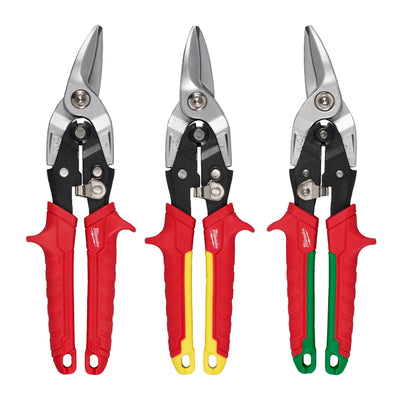
- Aviation snips with compound leverage, for straight or curved cuts in sheet metal
- Scissor-type sheet-metal shears, with plastic-coated handle
- Nibblers and sets of snips with angled blades
The range includes Stanley, Milwaukee, DeWalt, Fervi and Pavan items, as well as A.M.E.S. products.
How to choose
First of all, consider the cutting direction: straight, left or right, depending on the direction in which the cut sheet has to run off. Then consider the thickness and type of material, the length of the blade and the comfort of the grip, especially for long periods of work.
For quantities, sizes and availability AMES Srl works by quotation: write to info@amessrl.com or call 051 728529.
Active filters:
Products in this collection
In your quote
In compare
 In your quote
In compare
 In your quote
In compare
 In your quote
In compare
 In your quote
In compare
 In your quote
In compare
 In your quote
In compare
 In your quote
In compare
 In your quote
In compare
 In your quote
In compare
 In your quote
In compare
 In your quote
In compare
 In your quote
In compare
 In your quote
In compare
 In your quote
In compare
 In your quote
In compare
 In your quote
In compare
 In your quote
In compare
 In your quote
In compare
 In your quote
In compare
 In your quote
In compare
 In your quote
In compare
 In your quote
In compare
 In your quote
In compare
Frequently asked questions: Shears and Snips
What are sheet-metal snips used for?
Sheet-metal snips cut thin sheet metal and other sheet materials with a lever action, without heating the metal or producing sparks. On site they are used for sheet-metal work, flashings and metal cladding; in the workshop for off-cuts and small repairs. The most suitable type depends on the thickness of the sheet and the shape of the cut to be made.
What is the difference between compound-action snips and tinsmith's snips?
Compound-action snips multiply the force and let you cut thicker sheet with less effort. Tinsmith's snips are designed for long, precise cuts in thin sheet, such as straight-cut, right-cut or left-cut ones. Choose the type according to the thickness of the material and the length of the cut you need to make on the workpiece.
Which snips should I choose for curved cuts and for straight cuts?
For long straight cuts, straight-cut tinsmith's snips are suitable, while for curved cuts you need compound-action aviation snips, which follow a curve in the sheet. Right and left versions are chosen according to the side on which the piece you want to keep must stay, because they cut in opposite directions. For holes and internal cuts, use nibblers instead.
How do you use sheet-metal snips safely?
Wear work gloves and safety glasses, because the edges of cut sheet metal are sharp. Keep your hands away from the blades while cutting and secure the piece on a bench or in a vice. Do not force the snips beyond their capacity, and check that the blades are clean and properly aligned before every job.
What materials can be cut with sheet-metal snips?
They cut thin sheet in galvanised steel, aluminium and copper, as well as strapping and light metal profiles. Nibblers and scissor-type snips are used for thinner sheet or for internal shapes. Each model states on its product page the maximum thickness it can cut, which must be respected so as not to damage the tool and to obtain a clean cut.
Are sheet-metal snips also useful in the workshop for maintenance?
In the workshop, snips are used to cut off-cuts of sheet and make pieces to size for repairs and maintenance work on ducts, cladding and light metalwork. In the collection you will find models from brands such as Stanley, Milwaukee, DeWalt, Fervi and Pavan. For repeated cuts, a bench shear is better, being more stable and less tiring to use.