
 In your quote
In compare
Modified Containers
19 products
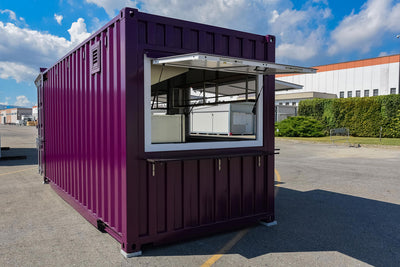
Modified containers are shipping containers converted for uses other than storage: offices, service rooms, bars and retail units. Doors, windows and openings are cut into the walls. The brand included is Garico Box.
Types in the collection
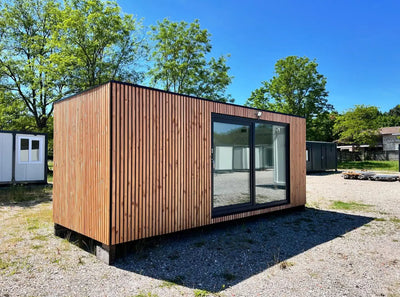
- Offices made from containers, with door and windows.
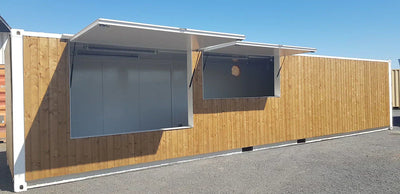
- Bar and retail unit containers, with hinged openings.
- Cut or shortened containers, to fit particular spaces.
Starting from a shipping container gives you a sturdy structure that is already sized, to which the required openings and finishes are added.
How to choose
Describe the intended use and the dimensions available: the modification depends on the openings, services and finishes required. Check whether internal insulation is included, how many access points are needed and whether a connection to the electricity or water supply is required.
AMES works on a quotation basis: tell us the quantity, dimensions and intended use and we will recommend the most suitable solution, with availability and delivery times.
Active filters:
Products in this collection
In your quote
In compare
 In your quote
In compare
 In your quote
In compare
 In your quote
In compare
 In your quote
In compare
 In your quote
In compare
 In your quote
In compare
 In your quote
In compare
 In your quote
In compare
 In your quote
In compare
 In your quote
In compare
 In your quote
In compare
 In your quote
In compare
 In your quote
In compare
 In your quote
In compare
 In your quote
In compare
 In your quote
In compare
 In your quote
In compare
 In your quote
In compare
Frequently asked questions: Modified Containers
What are modified containers used for?
They are shipping containers converted into offices, service rooms, bars, cafés, kiosks or retail outlets. Doors, windows and openings are cut into the walls, and services and finishes are added. Starting from a container gives a sturdy, already dimensioned structure, which is then modified with the required openings.
What fit-outs can be chosen for a modified container?
The configurations in the collection include offices with a door and windows, bars and retail outlets with hinged openings, kiosks for snack bars and sales, or cut containers for special spaces. The fit-out can be made to measure, with services and finishes suited to the intended use. More openings mean more structural work, so this must be assessed at design stage.
How do I choose between a 20-foot container and a 4-metre kiosk?
The choice depends on the available space and the flow of people. A 4-metre kiosk or a 6-metre bar is for direct sales in small spaces, while the 20 or 40-foot offers more floor area for a workshop, kitchen or service area. Measure the available area and the access route before deciding.
Does a modified container need permits?
It depends on the use, the duration and the location. A container intended as an office or permanent retail outlet may require building permits, connections and checks on the intended use. For a temporary installation, such as a kiosk for an event, the rules are different. Before buying, contact the local council and a qualified technician.
What services are needed for a bar container or an office?
A bar and café need an electrical connection, water and drainage. Offices additionally need ventilation or air-conditioning. Openings must be fitted with suitable window and door frames and insulation. The system must be designed by qualified installers, because the metal structure requires correct insulation and earthing.
How do I maintain a modified container over time?
Steel walls should be checked for rust and damp, especially at cut points and around openings. Exposed areas should be treated with protective paint and the gaskets of doors and windows checked. Electrical and water systems must be inspected periodically by qualified personnel.
Who uses a modified container?
It is used by building contractors as site service offices, restaurateurs for bars and snack outlets, event organisers for kiosks and temporary retail points, and companies looking for an outdoor office. Trade fairs and industrial areas also use living modules or cabins for staff. Every use requires dedicated design.
What is the difference between a fitted-out container and a living module?
A living module, such as the 14 square metre one or the 18 or 19 square metre modular cabins, is built as a habitable unit with insulation and finishes closer to an office. The fitted-out container starts from the shipping structure and is customised with openings and services. The first is more like a habitable cabin, the second is more flexible in shape and size.