
 In your quote
In compare
Lifting Slings
70 products · Lifting Accessories — Slings and Ropes
Lifting slings are the flexible elements that connect the load to the hook of the crane or hoist. They are used to sling and handle materials, machines and components without damaging them, distributing the weight safely.
What you will find in this collection
- Flat slings (webbing slings) in polyester, with reinforced eyes
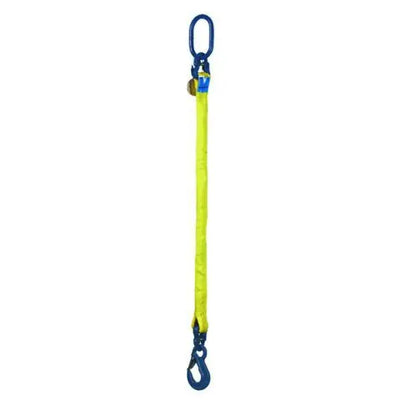
- Round slings in polyester
- Polyester lashing straps and chain slings
- Corner protectors and cut-resistant sleeves
- Lifting and carrying nets for cranes
The brands included are Fervi, SpanSet, Vigor, Butti and La Rete, as well as AMES-branded items.
How to choose the right sling
The rated capacity, shown on the label and indicated by the colour, must always exceed the weight of the load, taking the angle of pull into account. Flat slings suit wide, delicate loads, round slings those of irregular shape. Sharp edges always call for corner protectors or sleeves. Textile slings must be inspected every time and replaced if cut or worn.
To check availability, compatibility and lead times, write to or call AMES Srl and request a quote: supplies are on a quotation basis.
Active filters:
Products in this collection
In your quote
In compare
 In your quote
In compare
 In your quote
In compare
 In your quote
In compare
 In your quote
In compare
 In your quote
In compare
 In your quote
In compare
 In your quote
In compare
 In your quote
In compare
 In your quote
In compare
 In your quote
In compare
 In your quote
In compare
 In your quote
In compare
 In your quote
In compare
 In your quote
In compare
 In your quote
In compare
 In your quote
In compare
 In your quote
In compare
 In your quote
In compare
 In your quote
In compare
 In your quote
In compare
 In your quote
In compare
 In your quote
In compare
 In your quote
In compare
Frequently asked questions: Lifting Slings
What is a lifting sling and when is it needed?
A lifting sling is a flexible element that connects the load to the crane or hoist hook. It is used to sling materials, machinery and components without damaging them, spreading the weight more evenly than a chain. The catalogue includes flat polyester slings, round slings, straps and multi-leg slings. Before use read the capacity on the label and choose the type best suited to the shape of the load.
Flat or round polyester slings: which to choose?
Flat slings, or webbing slings, have a wide cross-section and sit well on the load. Round slings adapt to irregular shapes and tight grip points. Slings made of synthetic fibre must bear the marking required by standard EN 1492, which distinguishes flat webbing slings (part 1) from round slings (part 2). Check the marking before purchase and before every use.
What is the capacity of the coloured Vigor polyester straps?
In the Vigor catalogue colour is associated with capacity: the purple 1 t strap with 30 or 50 mm, the green 2 t strap with 60 mm and the yellow 3 t strap with 90 mm, all 1 or 2 metres long. The colour is an aid, but the capacity that counts is the one printed on the label of the individual strap. Do not use a strap with an illegible label, and check that the capacity is suitable for the load and the working angle.
How do corner protectors and sleeves protect slings from cutting?
Secutex SpanSet corner protectors and sleeves are placed between the sling and the sharp edge of the load, so the fibre does not cut or wear under stress. The catalogue includes hinged protectors, sleeves such as SF-1, SF2 or Clip, and coated strips. Choose the protector based on the sling diameter and the shape of the edge.
How is the capacity of a sling used with two legs or at an angle chosen?
When the sling works with two legs or at an angle, the usable capacity drops compared with a vertical leg. The catalogue's SupraPlus-X and Eco SpanSet loop slings and PowerStar, PowerForce and PowerFlex straps cover capacities from 500 kg up to 20 t, depending on the model. Calculate the load on each leg based on the angle and choose a capacity higher than the actual load.
When must a sling be taken out of service?
A sling must be taken out of service if it shows cuts, abrasions, fraying or burns, if it has been overloaded, or if the capacity label is no longer legible. Damaged stitching or a visible core are also signs it must be discarded. Do not repair it with tape or knots. Keep it away from sun and moisture to extend its life.
Lifting nets for cranes and helicopters: when are they used?
Lifting and transport nets for cranes and helicopters, such as those from La Rete with CE marking, are used to collect and transport loose materials or suspended packages. Before use check the marked capacity, the net mesh and that the attachment points are intact. Load the net evenly, without exceeding its edge, and keep people away from the area under the load.