
 In your quote
In compare
Flat Washers
63 products · Structural Bolts and Screws
The washer is a perforated disc fitted under the screw head or under the nut to spread the load over the surface and prevent tightening from damaging it. Flat washers are the most common form and are used with screws, bolts and anchors in construction, steelwork and mechanical engineering.
Types of washer in the collection
- Flat washers galvanised, in A2 stainless steel and in copper.
- Large-diameter and penny washers, with a larger outside diameter to spread the load better.
- Spring and serrated washers, to prevent loosening.
- Special shapes: diamond, oval and shaped washers for construction fixings, including for seismic applications.
- Stick-E washers from DeWalt.
Brands include Fischer, Bossong, Unifix, DeWalt and Fervi, as well as A.M.E.S. and CSC Edilizia products.
How to choose
The inside diameter must match that of the screw; the outside diameter and thickness depend on the load and the bearing material. For damp or corrosive environments choose stainless steel, for indoors galvanised is enough, while copper is used where a seal is needed.
For sizes and quantities, ask AMES Srl for a quotation.
Active filters:
Products in this collection
In your quote
In compare
 In your quote
In compare
Progress Profiles
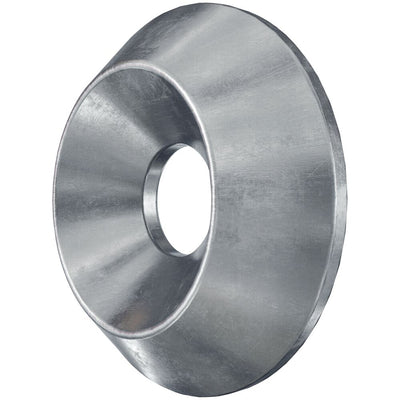
Washers Profoil for balconies and terraces Progress Profiles
Code rondelle-profoilit
 In your quote
In compare
 In your quote
In compare
 In your quote
In compare
 In your quote
In compare
 In your quote
In compare
 In your quote
In compare
 In your quote
In compare
 In your quote
In compare
 In your quote
In compare
 In your quote
In compare
 In your quote
In compare
 In your quote
In compare
 In your quote
In compare
 In your quote
In compare
 In your quote
In compare
 In your quote
In compare
 In your quote
In compare
 In your quote
In compare
 In your quote
In compare
 In your quote
In compare
 In your quote
In compare
 In your quote
In compare
Frequently asked questions: Flat Washers
What are plain washers used for?
The plain washer is fitted under the screw head or under the nut to spread the load over the surface. It prevents tightening from damaging the piece or leaving a mark, and helps keep the fixing stable. It is used with screws, bolts and plugs in construction, carpentry and mechanics.
When should a large or penny washer be used?
The large or penny washer has a larger outside diameter, and is used to spread the load over a wider surface. It is useful when the hole is large, the material is soft or thin, or the fixing must bear on timber or thin sheet metal. Choose the size based on the diameter of the hole and the thickness of the piece to be fixed.
Spring washers and toothed washers: what are they for?
Spring washers and toothed washers are used to counter the loosening of the nut caused by vibrations. The spring washer creates an elastic force that maintains the tightness, while the toothed washer has teeth that bite into the surface and the nut. They do not replace correct tightening, but they help keep the connection stable in machinery.
Which washer material should I choose?
A zinc-plated washer suits general use in dry environments, while stainless steel A2 is more suitable for humid or outdoor environments. Copper or brass washers are used where a seal or a particular appearance is needed, for example in installations and finishes. Match the washer material to that of the screws and nuts to avoid corrosion.
Why are washers needed for Torx screws?
Torx screws have a star-shaped recess and a head that can crush the material differently from hex screws, so a washer with the right diameter and thickness is needed. The washer specific to Torx screws spreads the pressure and prevents the head from sinking into the piece. Check the head size of the screw before choosing the washer.
Which washers are needed for seismic fixings?
For seismic fixings there are specific washers, such as FFD washers designed for seismic applications of category C1 or C2, which have dimensions and characteristics defined by the manufacturer. They must be used only with the anchor and system they are designed for, because their effectiveness depends on the whole assembly. Do not replace them with generic washers to save money.
When should a locking washer or a rhomboid washer be used?
The locking washer is designed to prevent the connection from loosening, working through friction between the nut and the piece. The rhomboid washer has a shape designed for timber, where it spreads the load over a wider surface, and must not be confused with the locking type. Choose it based on the shape of the piece and the size of the screw, to obtain correct contact.
How thick should a washer be?
The thickness of the washer depends on the size of the screw and on the load it must carry: a washer that is too thin can deform, while one that is too thick may not let the nut close properly. Standard washers are specified by standards such as DIN 125 for plain washers, but for special choices use the manufacturer's sheet. For critical fixings, confirm with a technician before fitting.