
 In your quote
In compare
MIG/MAG Welders and Welding Accessories
54 products · Stick (MMA) Welders and Welding Accessories
MIG/MAG wire welding uses a continuous wire that acts as both electrode and filler material, shielded by a gas. It is a fast process, suited to production work on steel, stainless steel and other metals, and is widely used in workshops, metalwork and maintenance.
What you will find in the collection
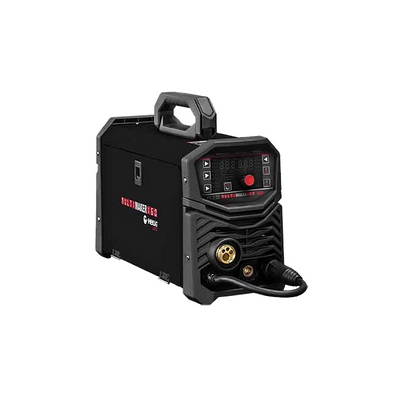
- Wire welders, including multi-process machines with MIG/MAG, flux-cored wire, MMA and TIG functions.
- Continuous wires on reels, for example in steel.
- Consumables and spare parts: contact tips, nozzles and torches.
- Gas accessories: cylinders, regulators and kits with nozzles.
- Auxiliary products, such as anti-spatter spray for welding.
The brands available are Awelco and Fervi, as well as A.M.E.S. products.
How to choose
You need to decide on the material and thicknesses to be welded, which determine the welder's current, and the wire to use with the right gas, or flux-cored wire if you work without gas. Check the power supply available and that the tips and nozzles are compatible with the torch.
For models, consumables and delivery times, request a quote from AMES Srl.
Did you know you can also hire this category instead of buying it?
Find out more
Active filters:
Products in this collection
In your quote
In compare
 In your quote
In compare
 In your quote
In compare
 In your quote
In compare
 In your quote
In compare
 In your quote
In compare
 In your quote
In compare
 In your quote
In compare
 In your quote
In compare
 In your quote
In compare
 In your quote
In compare
 In your quote
In compare
 In your quote
In compare
 In your quote
In compare
 In your quote
In compare
 In your quote
In compare
 In your quote
In compare
 In your quote
In compare
 In your quote
In compare
 In your quote
In compare
 In your quote
In compare
 In your quote
In compare
 In your quote
In compare
 In your quote
In compare
Frequently asked questions: MIG/MAG Welders and Welding Accessories
Which wire welder should I choose for steel and stainless steel work?
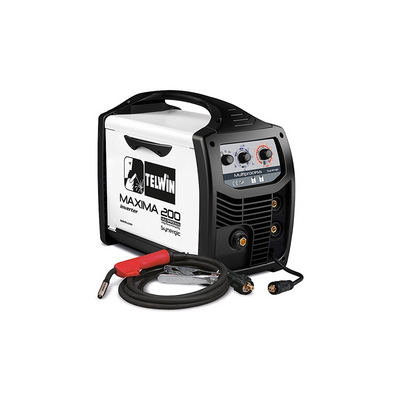
A MIG/MAG wire welder should be chosen according to the thickness to be welded and the type of wire required. Synergic machines adjust some parameters automatically depending on the wire and voltage, while others need manual settings. Check the maximum current and duty cycle shown on the data sheet. The catalogue includes models such as the Maxima 190 Synergic and the Panther 132 gas-shielded.
What is the difference between gas-shielded welding and flux-cored wire?
In MIG/MAG welding the gas shields the weld pool from the air. With flux-cored wire, the shielding comes from the coating of the wire itself, so gas may not be needed. Solid wire always requires gas. Choose according to the job and the environment: outdoors and in wind, flux-cored wire is often more practical.
Which wire should I choose for welding steel or stainless steel?
The wire must be chosen according to the material to be welded. Solid steel wire is for carbon steel, and stainless steel wire is for stainless steel. The catalogue includes steel and stainless steel MIG wires in several sizes, and welding wire on spools. The wire diameter must match the spool and the contact tip of the torch.
How do I change the nozzle and contact tip of a MIG torch?
Before doing any work, switch off the welder and disconnect the power supply. Replace the nozzle and contact tip with spares matching the wire diameter, because worn tips make the wire feed in jerks. Check that the torch liner is not kinked or damaged. The flowmeter for the MIG torch helps you adjust the gas flow.
How do I choose a gas cylinder for wire welding?
The cylinder should be chosen according to the gas required by the process and the amount of work. A small cylinder, such as the 13.6 litre non-refillable argon cylinder in the catalogue, is more practical for occasional work and for transport. The pressure regulator must be compatible with the cylinder. Store cylinders upright, secured, and away from heat sources.
When is anti-spatter spray needed for welding?
Anti-spatter spray is applied to nozzles and to parts close to the weld pool, to stop molten metal droplets from sticking. It should be applied to clean surfaces when cold. Do not spray it onto the workpieces to be welded, because it can contaminate the weld. Use it in ventilated areas and follow the instructions on the can.
How do I protect myself from the arc, fumes and heat when wire welding?
The arc emits radiation and fumes, so you need a mask with the appropriate filter, flame-retardant clothing and welding gloves. Work in a ventilated area or with fume extraction, and keep flammable materials away. The welder must be correctly connected, with the earth clamp secured to the workpiece. Health and safety rules, such as D.Lgs. 81/2008 (the Italian Legislative Decree 81/2008 on workplace safety), require these risks to be assessed.